Thursday, September 30, 2021

MALAWI GETS AfDB TOURISM BOOST

Malawi government has secured $800,000 (about K660 million) from the African Development Bank (AfDB) to help recoveries in the country's tourism sector.

The grant comes at a time when SADC countries are pulling up efforts in resuscitating the hospitality sector back to the period before the pandemic.

Malawi's Minister of Tourism and Culture Michael Usi, made the announcement in Lilongwe during the commemoration of the World Tourism day where he said the money would be used for matching grants by small-scale players in the hospitality and tourism industry.

The grant is expected to benefit 50 micro, small and medium tourism enterprises which are struggling to access finance to enhance their competitiveness.

“Disbursement of the matching grant would commerce in the coming month. We are putting in place policies to ensure that local communities directly participate in the tourism value chain rather than operate on the peripherals of the tourism industry,” Minister Usi said.

The funds would cushion beneficiaries from possible effects of the Covid pandemic and help them take a step towards recovery as the sector is one of the hardest hit where, in 2020 alone, over 300,000 people lost their jobs.

Recent figures indicate that the tourism sector directly supported 3 percent of employment in Malawi, creating about 233,000 jobs.

The sector has for a long time been beamed as the game changer for Malawi if nurtured well.

In its efforts to boost the sector, Malawi introduced a five year strategy for marketing the country to the world in order to increase tourists’ inflow, 'The Strategic Tourism Marketing Framework'.

The strategy redefines Malawi’s tourism product lines in the scope of Experience Lake, Experience Nature, Experience Wildlife, Experience Culture and Experience Mice.

It is earmarked to market Lake Malawi, which is the fifth largest fresh-water lake in the world by volume, the ninth largest lake in the world by area and the third largest and second deepest lake in Africa with high endemic fish bio-diversity.

The nature scope encompasses the country’s diversity of landscape including tea estates, forest reserves, streams, waterfalls, mountains and plateaus.

The strategy also sells Malawi’s cultural practices and cultural village setup to give tourists a feel of typical village life.

This year’s World Tourism Day was commemorated under the theme 'Tourism for Inclusive Growth'.

Tuesday, December 15, 2020

AFRICA ON THE MOVE FOR POVERTY ELIMINATION


African countries have been called upon during the 13th session of the African Continental Free Trade Area (AFCTA) to explore new and progressive initiatives that will lift it's people out of poverty.

The summit which was held virtually in light of the global Covid-19 health pandemic has put into motion the free trade treaty which was launched in 2018 in Kigali Rwanda that will create a giant continental market of 1.3 billion people with about 2.3 trillion US dollars.

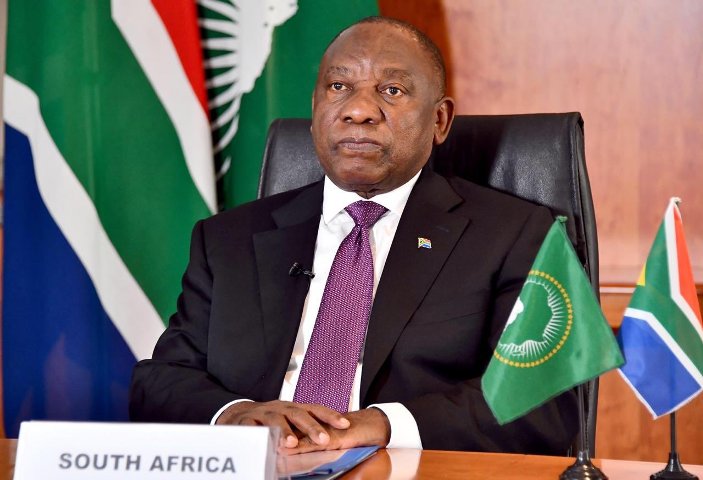
When addressing the summit, current African Union (AU) chairperson and president of South Africa Cyril Ramaphosa said the AFCTA is an initiative to create an integrated prosperous continent.

He said the AFCTA provides an opportunity for the growth of the private sector which he said must rise to the occassion by supporting the continental efforts through human and financial capital.

His Excellency - Cyril Ramaphosa 

He said, :"This our treaty presents immense opportunities for the private sector in Africa and will be a catalyst for the development and expansion of private enterprise on our continent. We call on the private sector to be our partners in this journey and provide support to this continental effort through the development of human and financial resources and investments in the areas such as infrastructure and technology ".

Adding in his speech, the AU chair said the treaty must facilitate greater acfews for women on trade and investment opportunities.

In his remarks, chairperson of the African Commission Moussa Faki Mahatma said the trade treaty is a game changer for the continent of Africa.

"We are now fulfilling an old dream of the founding fathers that is it's establishment and all the African markets, since 1963 to date, it has been a long way despite all the hiccups that they have faced and the natural disasters like Covid-19 this Africa has faced". Said Mahatma.

Secretary general of the AFCTA Wamkele Mene hailed a recent World Bank study which noted that if implemented effectively, the AFCTA has potential to lift 30 million Africans out of extreme poverty and 70 million out of moderate poverty by 2035.

Mene - It will take resolute determination

He said, "As much progress as we have made, integrating 55 markets will not be easy, it will be difficult, it will be a daunting task, it will take resolute determination decade after decade. However, to throw our hands in the air and say the task is too difficult is not an option "

Fifty four countries have signed up for the African Continental Free Trade Area which is expected to come in full course on 1 January 2021.

Tuesday, December 8, 2020

MW, MOZA STRENGTHENS RAILWAY SYSTEM

 The countries of Malawi and Mozambique have engaged each other in rehabilitating the railway lines which for long time has linked the two countries as a way of reviving the mode of transport.

The project, will in other scenario help in softening transportation cost in Malawi which is currently high among all Southern Africa Development Community (SADC)  countries.

According to Malawi ministry of transport statistics, the average cost for rail and road transport is as high as 10 dollars per tonne than 7 dollars per tonne which is a recommended cost in the region.

On Malawi side, the rehabilitation of the railway line will be from Limbe to Sadama and also from Marka in Nsanje to Bangula in Chikwawa by joint efforts between Central and East Africa Railway (CEAR) and Malawi government respectively.

According to Malawi ministry of transport spokesperson Andrew Mthiko, some processes have already began in ensuring that the future of the project is intact and impressive.

He said, :"We have started the procurement process by tendering out and people have submitted bids. We are evaluating the bids and we expect that by the end of this month a consultant will be identified. "

"some processes have alreadt began"-Mthiko


On Mozambique side, the rehabilitation of the line will be via Sena Line through the Mutarara-Vila Nova de Fronteira and Vila Nova da Fronteira -Bangula branch.

Mozambican minister of transport and communications Janfar Abdulai said they are also on the move in ensuring the progress of the project.

He said, :"Funds are being raised through traditional international cooperation partners to furnish the project. The second phase of the project would see the Beira-Lilongwe section being established. "

"funds are being raised"-Abdulai

The branch line is 115 Kilometres long, of which 44 Kilometres are on the Mozambican side between Dona Ana and Vila Nova da Fronteira, and the remaining 71 Kilometres on the stretch from Vila Nova da Fronteira to Nsanje-Bangula in Malawi.

The intention behind connecting the Sena Line, between Mutarana and Bangula, is to easily export Sugare to the European market through the port of Beira.

Sugar is in the top five of Malawi exports and the European Union is it's main export partner with almost 50 percent of exports. on the other hand, Mozambique Sugar confectionery accumulated to about 91.4 million dollars in 2019.


Mozambique injects USD30m


The resumption of the rail link follows the understandings between the Mozambican President, Filipe Nyusi, and his Malawian counterpart, Lazarus Chakwera, in October, when the two leaders met in Tete.

The official signing of the Memorandum of understanding (MoU) after the two leaders met, was done in Beira by Mozambique's Minister of Transport and Communications, Janfar Abdulai and Malawi's Minister of Transport and Public Works, Sidik Mia.

Friday, November 6, 2020

MALAWI YET TO DECIDE ON CRYPTOCURRENCY


The Reserve Bank of Malawi has revealed on a side-lines of the Financial Services Lawyers Conference that it is yet to decide whether Malawi is to start using the cryptocurrency. 

The bank said it is to do some consultations with stakeholders before it legalise the system even though some circles are already in use of it.

Speaking at the conference, RBM General Council and Bank Secretary, George Chioza, said as it stands currently, the digital asset is illegal.

He said, : “At the moment, Malawi is really on the border line. We have not said yes or no but we know there are cryptocurrencies. Take caution when you are dealing in those currencies,” Chioza said.

Cryptocurrency is a digital means of exchange that uses strong cryptography for financial transactions which includes: Bitcoin, Litecoin, Ethereum, Zcash, Dach and Ripple.

Adding to the remark, RBM’s Ethics and Compliance Manager, Thabo Chakaka Nyirenda said cryptocurrency is very difficult to monitor transactions and even money laundering due to the complex mathematics which are involved.

“The dilemma is that some commentators have expressed fears that outright banning of digital currencies would force users to go underground where they will continue to operate without anti-money laundering oversight hence, the need to counterbalance the risks and the benefits.” Said Thabo.

Cryptocurrency is legal in countries like: Zimbabwe, South Africa, Namibia, Nigeria, United States and Costa Rica among others.


Wednesday, October 21, 2020

NEWCASTLE DISEASE BLOWS MILLIONS ANNUALLY

It has been known that Newcastle, a poultry disease which appears during the hot seasons, blows millions of Kwacha's every hear in the country.

In an interview with the National Coordinator for Smallholder Poultry Farmers Association of Malawi (SPOFAM) Ernest Wyson, said ninety percent of revenue is lost in Malawi from traditional poultry keepers through the disease.

He said, : "Up to ninety percent of village chicken stocks are lost annually in affected stocks in Malawi, traditional poultry keepers lose millions of Kwacha's annually."

In Malawi, the disease appears two to three times a year during the hot months and do kill many chickens within a few days or a week.

According to Wyson, under extreme temperatures that are sometimes associated with climate change, some poultry can hardly cope with the conditions considering their body temperatures.

He also added that the disease is spread directly by contact between sick and healthy chickens and also that farmers should try as much as possible to keep their birds under minimum recommended temperatures.

While other farmers opt for several remedies to cure the disease, Wyson reminds that there is no treatment for Newcastle disease but can be prevented using vaccines which he also stressed the upsurge of the disease is due to lack of the vaccines and care more especially in the traditional poultry keeping.

"Vaccination against Newcastle will protect only against Newcastle disease, not other diseases. Chickens vaccinated against Newcastle disease may still die of other diseases. Vaccination of chickens against this disease is cheap and it is one of the most important ways in which to improve chicken production." Said Wyson.

Wednesday, October 7, 2020

COVID 19 STILL HAUNTING TOURISM SECTOR

Malawi Tourism Council (MTC) an umbrella body for tourist operators in the country, has been engaging the government to bail out the tourism sector to recover as it has been the hardest hit by the Covid 19 pandemic.

The council has expressed worries for the tourism sector being overrun of support in the 2020/21 national budget which has been estimated at K2.2 trillion which in turn it says could have boosted it's recovery.

According to a statement released recently by the MTC, the board is in awe as to why the budget was silent on the support for the tourism industry, which is one of the hardest hit by the pandemic and has lost more than 35,000 jobs since March.

"More than ever, the industry, which makes substantial contribution to the economy, needs a swift government intervention while realising that full recovery for the industry is projected for a couple of years or longer." Reads part of the statement.

It is clear that players in the tourism sector are advocating for the suspension of pay as you earn (PAYE), temporary waiver on fixed utility bills such as electricity, suspension of interest on bank loans against a revised interest rate, suspension of withholding tax payments, postponing payment of licences and permits on food and beverages.

Recently, the Principal Secretary in the Ministry of Tourism, Wildlife and Culture, Isaac Katopola admitted that the request by the MTC officials for government to bail them out was made through the Ministry of Finance and the Reserve Bank of Malawi.

He said the request mainly focused on two areas either to make a once-off payment or pay part of the salaries of compliant tourism operators for at least three months to ease possible closures of companies but stressed that the government has to look where to get the finances.

Said Katopola, : "Another request was on possible cuts on utility charges that are calculated based on maximum demand, this is still being considered but the covid 19 business challenges and possible solutions are like unchartered waters that may take time to deal with."

The economy has lost about K40.5 billion in the tourism sector between April and June and needs about K7.3 billion monthly as bail out to cutter for staff bills.

Saturday, September 26, 2020

NEW TAX MEASURES TO HURT CONSUMERS

One of the audit firms in the country, EY has stressed that the newly introduced 16.5 percent Value Added Tax (VAT) on cooking oil which comes into effect on 1 October 2020 will hurt consumers.

The firm said in its tax update for the 2020 national budget that there is need for Treasury to engage oil manufacturers on the introduced VAT and consider making the price of cooking oil VAT inclusive to reflect the intention of the government.

The update reads, : "The manufacturers continue to benefit importation of raw materials duty free through the industrial rebate scheme. There will, therefore, be no expectation of increased oil prices since the oil industry is protected from adverse competition under the surcharge tarrif regime. However, VAT is a consumption tax, and the final consumer bears the final burden".

Minister of Finance, Felix Mlusu announced in the 2020/2021 National Budget Statement that the tax free bracket will be increased subject to enactment of the taxation amendment bill 2020.

The increase will be from K45,000 per month to K100,000 per month and the 15 percent middle tax bracket has already been proposed in the bill to be removed.

According to EY, the eleventh schedule to the taxation act was amended in 2019 and it applies not only to pay as you earn individuals, but to " individuals" business income as well.

The firm said, : "It is hoped that the proposed amendment will clarify on the scope of the intended disparity on allowable deductions  between the corporate entities and individual business income".

EY stresses that the proposed amendment on Capital Gains Tax, if not carefully analysed and pragmatically drafted, may cause confusion to the tax payers.

Income that accrues to a tax payer under section 11 of the taxation act, is income to which the taxpayer has a vested rather than a contingent right.

In a sense that a vested right is a right of ownership, including the right of enjoyment, which may however be postponed, and that a contingent 'right' is a  chance or a possibility of a right.

Tuesday, September 22, 2020

BCC DEMOLISHES ILLEGAL VENDING SHARKS

The Blantyre City Council (BCC) has demolished business sharks of illegal street vendors in Limbe in order to force them back to their legal business places.

BCC has demolished the sharks the night before of which some people claim that the vendors were increasing crime rates in the town and also that they were destroying the town's streets as others reached an extent of doing businesses on verandah's of other shops.

In the morning, some people tried to start havoc but did not go far as police officers acted quickly.

Currently, there is no immediate response from the BCC to clear the matter.


Tuesday, September 15, 2020

BUDGET STATEMENT FACES HOT SPITS

Mlusu - Budget has been prepared under the theme 'Living the promise'

The newly presented 2020/2021 national budget tabled in Parliament last Friday has come into a convolution of crushing views as several bodies respond to the budget statement.


The budget which is to come into effect from 1 November 2020 has been proposed at K2.2 trillion.


Speaking when presenting the budget, the minister of finance Felix Mlusu said the budget has been developed under the theme 'Living the  promise' and the focus is achieving sustainable and inclusive growth, macroeconomic stability and sound financial management.

Kapito - 'Budget not good for consumers'


He  said, : "The objectives will be pursued through transparency and accountability, rule of law, enhanced resource mobilisation, efficient resource utilisation and provision of infrastructure".


However on Saturday, the Consumers Association of Malawi (CAMA) issued out a statement which faulted the government that they ignored the promises that could generate resources to support livelihoods.


In the statement, Cama executive director, John Kapito said the budget does not respond to any economic recovery and is a complete departure from the many promises that were made during the campaign period.


" Most Malawians expected that the new government would do things differently from the previous government, but unfortunately the current budget statement is unable to articulate key issues that the government needs to pursue to resuscitate the ailing economy and people's livelihoods ". Kapito hinted.


Some of the ignored promises which Kapito stated include :  the reduced prices of passport and driving licences, free connection of water and electricity, the creation of one million jobs and the removal of taxes on some basic goods and services.


" Government has Instead introduced measures that will hurt many consumers such as the introduction of new taxes on some products such as cooking oil and taxes on winning bets which has become a new income generator to the many unemployed Malawians". He added.


On the other hand, the Malawi Confederation of Chambers of Commerce (MCCCI) also responded to the budget saying it has failed to consider private sector tax incentives.


MCCCI director of business environment and policy advocacy Madalitso Kazembe said they hoped for efficiency driven fiscal policies and reduced tax burden from the government.


"We also expected the minister to articulate measures they will undertake to pay outstanding arrears to private sector going forward as this has been a big challenge for years". Kazembe said.


However, Kazembe said overall, the budget will address fiscal deficit measures and emphasises on reducing overall debt by coming up with a debt reducing fund.


She added, : " The budget has however emphasized the need to integrate the informal sector into the system, which if it were to succeed could be one way of widening the tax base".


Commenting on the same budget, former minister of finance, Honourable Joseph Mwanamveka said the government has lied to the country as a lot of promises that hooked the hope of Malawians have been skipped.


Mwanamveka also added that a lot of policies that have been included in the budget are the same with those of the last government.


Out of all the sectors, the education sector  is the leading in fund allocation amounting to K384 billion, the Agricultural sector has been allocated K354.8 billion, health sector K204.7 billion and transport sector K150.6 billion.


Mlusu said the Affordable Input Program has been allocated K160.2 billion and is expected to benefit 4.2 million farming families.


Constituency development fund which members of parliament receive for development of their constituencies has been increased from 30 to 40 million Kwacha. 


Monday, September 7, 2020

MPINGANJIRA BECOMES EX- FDH GROUP BOSS

A renowned business guru in the country, Thomson Frank Mpinganjira has retired from his position as FDH Financial Holdings Group executive officer, a press release  by the group indicates.


The release which has been dated 7 September, 2020 says the retirement is with effect from 1 September 2020.


According to the statement, Mpinganjira's retirement is due to his fulfillment of his ambitions which started in December 1999.


"Dr Mpinganjira's retirement follows the fulfillment of his ambition and vision in December 1999 when the First Discount House was conceived". Reads part of the statement.


Dr Mpinganjira commenced the process of setting up the First Discount House in December 1999 which opened doors in April 2002 as its Managing director until 2007.


The FDH Bank was then later set up in November 2007 with Mpinganjira as its first managing director for a year.


Recently, Dr Mpinganjira was quoted marvelling at his accomplishments regarding his work done.


He said, : " Following the successful listing of FDH  Bank plc, the flagship subsidiary of FDH Financial Holdings Limited, I consider my work done here and it is time to move on".


Prior to his retirement, Dr Mpinganjira will proceed to manage the Thomson and Barbara Mpinganjira foundation and other family businesses while FDH Financial Holdings Limited will continue its corporate social responsibility works inspired  by him.


FDH Financial Holdings Limited currently has FDH Bank plc, FDH money bureau Limited, First Discount House Limited, FDH house advisory services and MSB properties Limited as its subsidiaries.

Saturday, September 5, 2020

PUMA GONE DIGITAL - launches 'epuma'


Launches 'e-puma'

As one way of easing transactions with its customers, Puma Energy Malawi Limited has launched a mobile application called epuma which will allow customers to place fuel orders, get notified via arlets for overdue activities and track real time order status among others.


The application which is to be used in mobile phones, tablets and computers, updates the past way where customers used to make calls or send texts to make orders or check balance in their accounts.


During the launch, Puma Energy Malawi managing director, Davies Lanjesi hailed the innovation as an interface between the company and its customers.


He said, : "The  whole end game is for you the end users who go to Puma sites to make sure that every time you come to our retail sites anywhere in Malawi you should find our products, so we are talking about improved efficiency".


Present during the launch of the application was the Minister of Energy Newton Kambala who said the remarkable development will decrease physical contacts amidst the corona virus pandemic.


" Considering that currently we need to create distances between ourselves because of Covid-19, I feel it adds value to how  business is being done". Said Kambala.


The technology is expected to boost the company's revenue which will grow the company and enhance an expansion drive in the next five years.

CAMA WARNS FOR FUEL PRICE HIKING

The Consumers Association of Malawi (CAMA) has warned Malawians on a prospective rise of fuel prices which could be as a result of fluctuation of prices at international market.


The Association said the impact of the hiking on local prices could be in the medium to long term.


Kapito - MERA board need to be appointed soon

CAMA executive director, John Kapito said when updating journalists on petroleum pricing trends amidst Covid-19 pandemic that the demand for petroleum products is now increasing globally as countries are loosening their restrictions.


He said, : "We have noted that on the international market the price of oil has been increasing as economies begin to open up after Covid-19 lockdowns. Again we have noted that the Kwacha has been falling, definitely they would have to increase fuel prices anytime".


He then appealed to President Lazarus Chakwera to be quick in appointing a board for the Malawi Energy Regulatory Authority (MERA) stressing that the only reason prices are not moving up now may be because MERA does not have a board.


MERA board was dissolved in June this year and during the first half of the year, fuel prices have been revised downwards to K664.80 per litre of diesel, K690.50 per litre of petrol and K441 per litre of paraffin.


For a long time, fuel prices have been cushioned by the price stabilisation fund which Kapito said is the reason most recent trend in global prices have not been reflected on the local market.


" Any fuel  price hike would hurt customers but when it is gradual, the pain is less. Again, we don't want  a repeat of a situation which we had in 2012 where we were all sleeping at filling stations because one person, a politician, had made a decision to sell the fuel at less than the price of importation ". Kapito said.


Since March, when the global oil industry faced the biggest drop in demand, prices have developed from below 20 dollars which is about K15,000 a barrel.


Recently, Reuters reported that oil prices edged higher as better than expected and rose 45 cents to 45.58 dollars which is about K33,750 a barrel.

Thursday, August 27, 2020

CONCERNED YOUTH ORGANISATION INJECTING ENTREPRENEURSHIP SKILLS IN THE YOUTHS

As one way of making the youths vibrant in entrepreneurship sector, Concerned Youth organization (CYO) is on the run in imparting entrepreneurship skills so that youths can as well be reliable business minded people.


The organization through its United States Agency for International Development (USAID) funded project, is striving to provide solutions to the youths as they struggle economically and enabling them to make a living.


In an interview with CYO executive director, Harvey Chimaliro, said youths need to be empowered economically rather than leaving them to wonder idle in the communities.


He said, : "The main objective is to provide skills in youths and women in the communities so that they can venture in either entrepreneurship and set up their own businesses or they can secure employment easily and earn a living rather than sitting idle".


Chimaliro further encouraged youths not to sit on the skills they have obtained in several trainings but to use them for their own benefit and help their families with along the way.


" They should use the skills they have acquired to benefit their lives and even support themselves, they should aim high and become independent financially or become employers so they can employ others and not to think about themselves ". He said.


Bearing in mind the Corona virus pandemic, the youths are being equipped with skills that are enabling them to earn a living and support for their families, like sewing of face masks which they are selling in this time of the pandemic.


So far, CYO has trained youths and women in Mchinji in shoe making where as another training in tailoring and Knitting was held in Blantyre on 12 and 21 August 2020.


During presentation of certificates to graduating trainees, the Blantyre City Council through its social welfare and home economics section commended the project for its impact on the grassroots community members.

Tuesday, August 25, 2020

LOCAL CURRENCY DEPRECIATES AGAINST MAJOR TRADING CURRENCIES

A monthly economic review for May 2020 by the Reserve Bank of Malawi (RBM) has shown that the Malawian Kwacha depreciated against major trading currencies.


The review which is prepared with the aim of providing current economic information reveals that the Malawian Kwacha depreciated against Euro as it remained stable against the United States dollar.


"The Malawian Kwacha remained broadly stable against the United States dollar and traded at K741.38 per dollar at end May 2020. Conversely, the local currency slid by 2.9 percent against the Euro and traded at K833.38 per Euro, following strengthening of the Euro as most economies in the Euro area  began to relax some of the restrictions which were imposed in light of the Corona virus pandemic". Reads part of the document.


The Malawian Kwacha further depreciated in the SADC region against the South African rand by 3.6 percent and traded at K43.14 per rand, an out turn explained by strengthening of the rand following an announcement by the South African Reserve Bank (SARB) that it would purchase government bond directly from the Secondary market to improve the county's liquidity condition.


"The local currency depreciated by 2.4 percent against the Zambian Kwacha (ZMK) and traded at K40.43 per ZMK primarily reflecting the strengthening of the ZMK due to improved investors confidence as the country planned to restructure its rising and unsustainable external debt".


However, the local currency exhibited mixed performance against the rest of its trading partners currencies as  it appreciated against the British pound by 0.9 percent and traded at K920.44 per pound.


The Malawian Kwacha further gained some strength against currencies in the Asian region as most Asian economies currencies weakened due to the effects of Corona virus crisis.


The document reads, ; " The local currency gained value by 0.5 percent against Japanese yen, 1.3 percent against Chinese yuan, and 0.5 percent against Indian rupee and traded at K6.88 per yen, K103.08 per Yuan, and K9.75 per rupee respectively ".

Wednesday, August 19, 2020

K10.5 BILLION PROFIT FOR FMB HOLDINGS

FMB Capital Holdings plc (FMBCH) has registered a profit after tax of 14.29 million dollars which is about K10.5 billion in the half year period ended June 30, 2020.


According to its published financial statement, in the same period last year, the group registered 5.1 million dollars which is about K3.8 billion representing 181 percent growth.


The company’s assets grew from 950 million dollars to 1.1 billion dollars representing a 15 percent increase.


Reads part of the report, : “The group has witnessed stellar performance from its Botswana subsidiary owing to increased transactional volumes, a growing customer base and a significant foreign currency income”.


“FMBCH’s Zimbabwe business which had a difficult 2019 owing to exchange rate challenges in that market, also performed well above expectation while businesses in Malawi, Mozambique and Zambia have remained profitable”.


The statement indicate that during the period under review, the company’s net interest grew by five percent to 29.06 million while non-funded income rose by 20 percent to 23.90 million dollars from 19.95 million dollars in June 2019.


In his remarks, FMBCH group managing director, Dheeraj Dikshit, said the results are an encouragement to them and are in line with the company’s 2020 financial and strategic goals.


He added that in the earlier months of 2020 when the covid-19 pandemic became more pronounced, the group prioritized the safety of its colleagues, customers, partners, suppliers and the local communities in which they work in.


“I would like to largely thank the extraordinary efforts of all our people who delivered a resilient first half performance in the face of challenging economic environments. Disciplined execution and fast innovation in the face of a crisis contributed to improved organic growth and profitability”. Said Dikshit.


The group plans to end the year in a strong position following a number of initiatives that have been implemented across its market.


FMB capital holdings plc operates in five Southern African Development Community (SADC) markets : Malawi, Zambia, Botswana, Mozambique and Zimbabwe.

PROJECTIONS ON MW GREEN GOLD MEETS

Recent figures from the country’s Tobacco market regulator, Auction Holdings Limited (AHL) indicates that revenues from the crop could be relatively low by the end of this year’s season.


The figures indicates that by the end of week seventeen, which is about two weeks to the closure of the season, the country has realized 168 million dollars which is about K126 billion.


From the same period last year, the country had realized 204.3 million dollars which is about K153.2 billion. This represents a difference of about 36.3 million dollars which is about K27.2 billion.


The figure projection corresponds to the remarks made recently by TC executive director, Kaisi Sadala that the commission is expecting a drop in this year’s Tobacco final output.


On a current note, Sadala has expressed shock that the drop in volumes is happening earlier than usual even though Tobacco inflow contraction is normal.


He said, : “Tobacco volumes in the fields are coming to an end but this year it is happening earlier and it goes back to what we said earlier that it seems like this year, the Tobacco volumes are much lower than we thought”.


He added that the early drop could be as a result of an overestimation of Tobacco output in the country and across the region.


By the end of seventeenth week, about 109.7 million kilograms of all types of Tobacco had been traded whereas the same period last year, 138.6 million kilograms had been traded.
The country planned to produce 155 million kilograms of Tobacco against a trade requirement of 161 million kilograms.


Tobacco is the country’s leading forex exchange earner but it has been falling gradually over the past Ten years. 

Monday, August 10, 2020

RED CROSS BOOSTING BUSINESSES AMIDST CORONA

The Malawi red cross society has engaged into a covid 19 response program in which it is distributing cash to 3,150 households in some boarder districts.


The humanitarian organization says due to boarder restrictions imposed in the districts, businesses have shrunk which has resulted in a lot of people facing financial hardships.


The organisation's national Covid 19 coordinator, Roster Kufandiko said when distributing cash to some households at Ntaja in Machinga that communities in rural areas need urgent support to boost their businesses amidst the virus.


He said, : "Covid 19 has come with different effects which some are social and some are economical, so when we did a study on  how some of the areas have been affected alongside Malawi government, we discovered that due to the restrictions in movement, some of the boarder businesses have been affected and people are not doing their businesses"


"Therefore, we thought of providing them with top up cash so that they can caution the loss that is coming because of the restrictions which are coming because of Covid 19."


According to Kufandiko, providing support to the communities will help limit people's movement in search of finances for their families if among the beneficiaries will be people who tested positive to Covid 19 and are not able to do their day to day income generating activities.


During the program, every household is to be given K15,000 for a period of 12 months in districts of Machinga, Mangochi, Ntcheu and Mzimba. 

Friday, August 7, 2020

HOPE TO FLY AGAIN

Government has announced the reopening of airports which were closed the to the covid-19 pandemic by the end of this month.


The announcement has come at a time when the airports have remain closed for five months as one way of containing the pandemic.


Director of air transport, James Chakwera, said the actual dates for the reopening will be announced later as they are still engaging with the ministry of health.


"We really don't know an end to this pandemic and somehow life has to go on. We have seen that all around us most of the airports have been opened, we have been discussing the issue and we are still discussing. I think there are one or two issues outstanding that will be guided by the ministry of health otherwise we are ready to go. We believe that may be before end of this month we should be opening the airports." Chakwera said.


Businesses have been on a stand still as there was no coming in or out using the airports and now hope  is popping as sectors are being revived slowly.


In his remarks, Joseph Josiah, Malawian airlines spokesperson said the impact of the closure has been unprecedented.


"To us it means five months of no operations and no revenues. We are excited with the news but we are still waiting for the official communication from the authorities." He said.


The country's airports have been closed since 1 April 2020 and now African countries are reconsidering resumption of air travel.

Thursday, August 6, 2020

LIMBE - NSANJE RAILWAY TO SAVE 3 DOLLARS A TURN

The minister of transport, honourable Sidik Mia has remarked that the 72 kilometres railway line which is being rehabilitated from Limbe to Nsanje will reduce cost by 3 dollars which is about K2,250 per turn.


Mia made the remark when he was on a tour to appreciate the progress of the work where he said government have plans of making sure that the line connects to Beira in order to reduce transportation  costs of imports for Malawi.


"The ministry of transport is entrusted in making sure that the transport cost be reduced and mach that of the SADC region which is about 7 dollars per turn. Currently, we are about 10 dollars a turn so we want to make sure that is achieved so that our partners, exporters and traders get maximum profits without being hindered by transport cost and of course imports should also be cheaper for the benefit of all Malawians."


The dorsility of the line has made business activities difficult over the time as people from lower shire could do business easily before proceeding to Limbe market.


Commenting on the progress of the railway, Central East African Railway (CEAR) project manager of the line Chrispine Kapalamula said the work which is in phases will see them to next year  before completion.


Kapalamura said, : "We've done about sixteen kilometres in the first phase out of the 23 kilometers and for the second phase, we've done about six kilometres of the 21. For the earth works we've done about fourteen kilometres of the 21 which represents a good percentage of all."


The 23 kilometres which is from Limbe to Nansadi station is expected to be completed by December this year and from Nansadi to Luchenza by next year.

Sunday, August 2, 2020

NBS BANK REGISTERS 102% UP PROFIT

NBS bank- a listed organisation on the Malawi Stock Exchange (MSE) has recently announced that it has registered a 102 percent profit in the first six months of 2020 ended June 30.

According to a statement released by the bank, during the same period last, it recorded K1.4 billion profit after tax, a situation which has popped up as it has now registered K2.8 billion profit after tax.

The banks statements of financial position indicates that net income rose by 38 percent whereas customer deposits increased by 22 percent.

“Net interest income grew by 55 percent in the first half of 2020 as compared to a similar period in 2019 largely as a result of prudent management of investments in money market instruments and loan book growth.” Reads part of the statements.

An increase in the share price to 44 percent has qualified it as one of the top performing entities on MSE movement this year.

Its capital ratio now stands at 24.6 percent with an annualized return on equity at 31 percent.

Chief Executive Officer of the Bank, Kwanele Ngwenya says the results are evidence of all the hard work and diligence that has been put into turning around the organization.

He said, : “The management team has maintained a steady course in the fulfillment of the banks five year strategy in which good governance, risk management, growing a quality loan book, money market investments, robust ICT systems and hardware, and investing in the banks staff were the core of the agenda.”

Ngwenya added that the ground work for the bank has been laid and its time they start building on it.

MALAWI GETS AfDB TOURISM BOOST

Malawi government has secured $800,000 (about K660 million) from the African Development Bank (AfDB) to help recoveries in the country's...